
Samsung PM9E1: The Ultra-Compact PCIe Gen5 SSD Quietly Changing the Game
A New Era of Compact Storage: Samsung’s PM9E1 Breaks Cover
Samsung has once again pushed the boundaries of storage technology, quietly unveiling a remarkable new solid-state drive that promises to reshape the landscape of high-performance computing. The much-anticipated PM9E1 SSD emerges as a testament to relentless innovation, delivering blistering speeds in an extraordinarily tiny package. This stealthy arrival marks a significant leap forward, particularly for devices where space is at an absolute premium.
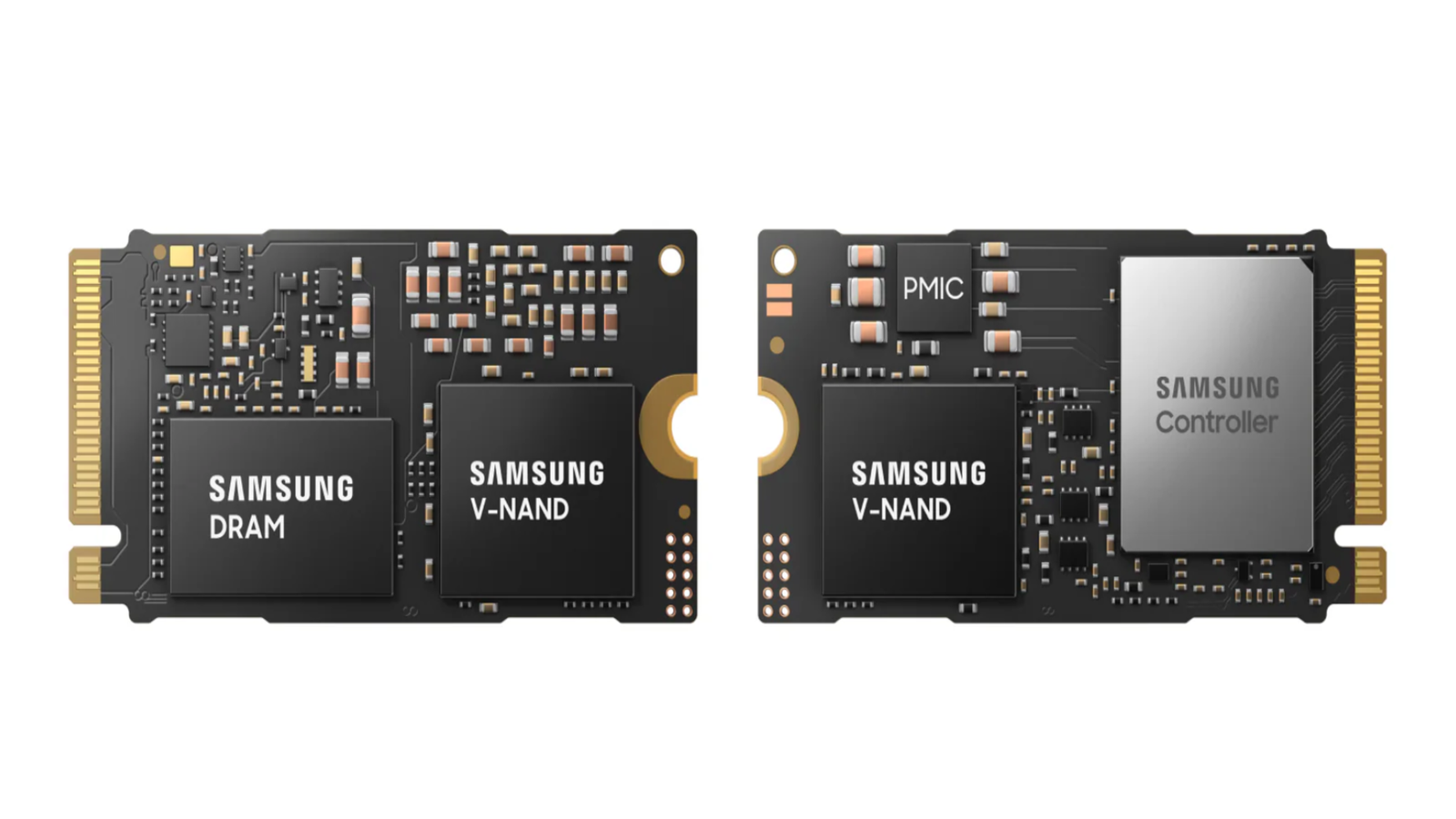
Dubbed by some as a “mini-9100 Pro,” the PM9E1 boasts a minuscule footprint, measuring just 22 x 42mm. This compact M.2 2242 form factor is a game-changer, allowing for integration into thinner laptops, embedded systems, and even industrial applications where traditional, larger SSDs simply wouldn’t fit. Despite its diminutive size, it houses advanced PCIe Gen5 capabilities, a feature previously reserved for much bulkier drives.
The inclusion of PCIe Gen5 support is perhaps the most striking aspect of the PM9E1. This next-generation interface provides double the bandwidth of PCIe Gen4, enabling unheard-of data transfer rates. For consumers and developers alike, this translates to lightning-fast boot times, near-instantaneous application loading, and incredibly rapid file transfers, fundamentally enhancing overall system responsiveness and user experience.
Achieving such a powerful performance profile within these tight physical constraints is a remarkable engineering feat. It showcases Samsung’s prowess in component miniaturisation and power efficiency, critical factors when designing for compact devices. The drive exemplifies how cutting-edge flash memory controllers and NAND technologies are being integrated more efficiently than ever before, paving the way for future advancements in storage.
The implications for various market segments are profound. Ultra-thin notebooks, often constrained by space, can now benefit from enterprise-grade speeds without compromise. Similarly, the industrial computing sector and Internet of Things (IoT) devices, which require robust and fast storage solutions in harsh or confined environments, will find the PM9E1 to be an invaluable component, driving new possibilities.
However, while the PM9E1 champions technical progress, it also brings into focus certain practical limitations that inevitably arise with such advanced miniaturisation. Foremost among these is the challenge of thermal management. Cramming high-performance components into such a small area naturally generates heat, which must be efficiently dissipated to maintain optimal performance and longevity.
Manufacturers integrating the PM9E1 will need to devise sophisticated cooling solutions, potentially requiring innovative heatsink designs or careful airflow management within their devices. Without adequate thermal control, the drive’s impressive speeds could be throttled, undermining its full potential. This underscores the delicate balance between raw power and practical implementation in real-world scenarios.
Another consideration is the current ecosystem for PCIe Gen5. While motherboards and CPUs supporting this standard are becoming more prevalent, they are not yet ubiquitous, particularly in the compact device categories the PM9E1 targets. Furthermore, the bleeding-edge nature of this technology often comes with a premium price point, which might initially limit its widespread adoption to high-end and niche markets.
Despite these hurdles, the arrival of the PM9E1 serves as a clear indicator of the future direction for solid-state storage. It foreshadows a world where powerful computing capabilities are seamlessly integrated into an ever-shrinking array of devices, from personal electronics to industrial automation. Samsung is setting a new benchmark for what is achievable in compact, high-speed storage.
In conclusion, Samsung’s PM9E1 is more than just another SSD; it’s a harbinger of innovation, demonstrating how the pursuit of smaller, faster, and more efficient components continues to redefine technological possibilities. Its silent emergence speaks volumes about the continuous push for excellence, promising a future of unprecedented performance in the smallest of packages, provided the practical challenges can be deftly navigated.