Redmi 15 technical deep dive: Snapdragon 6s Gen 3 explained

Understanding the power behind Redmi 15’s performance
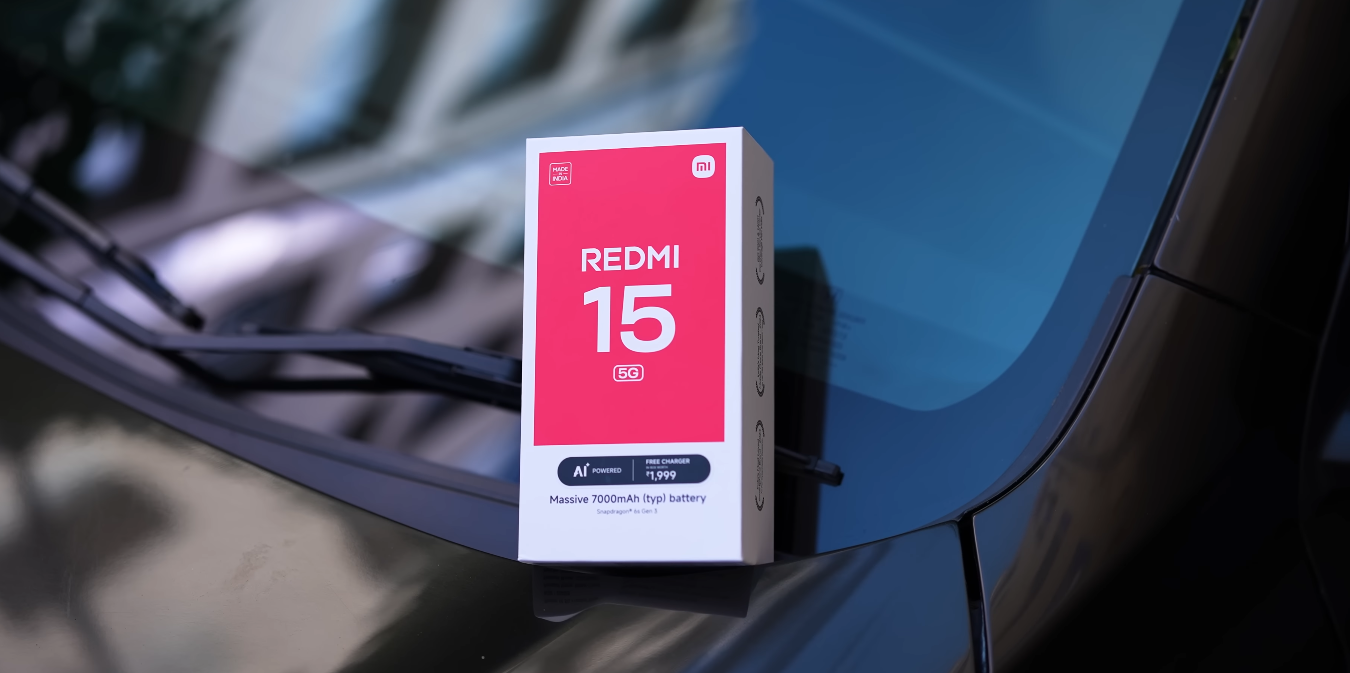
The Redmi 15 introduces Qualcomm’s Snapdragon 6s Gen 3 chip to the mid-range smartphone market, marking a significant leap in performance and efficiency for Xiaomi’s latest device. Built on a 6nm process, the Snapdragon 6s Gen 3 combines strong daily performance, improved graphics handling, and excellent power efficiency — all designed to complement the Redmi 15’s massive 7,000 mAh battery and 144Hz display.
At its core, the Snapdragon 6s Gen 3 features an eight-core CPU built on a 2+6 architecture. This includes two high-performance Cortex-A78 cores clocked at up to 2.3GHz and six power-efficient Cortex-A55 cores running at 2.0GHz. The result is a chip that balances smooth multitasking with lower energy consumption. The high-performance cores handle demanding tasks like gaming and media editing, while the efficiency cores take care of lighter background processes, ensuring sustained performance without overheating.
Graphics are powered by the Adreno 619 GPU, a capable unit that delivers enhanced gaming and visual performance over previous Snapdragon 6-series chips. Paired with the Redmi 15’s 144Hz refresh rate display, animations, scrolling, and gameplay feel noticeably smoother. While it won’t rival flagship GPUs, it comfortably handles popular titles like PUBG Mobile, Asphalt 9, and Genshin Impact at moderate settings with stable frame rates. Casual and mid-level gamers will find it more than sufficient for daily entertainment.
Connectivity is another strong point of the Snapdragon 6s Gen 3. The platform supports 5G connectivity, dual-SIM standby, Wi-Fi 6, and Bluetooth 5.2 — ensuring future-ready compatibility for UK users. The integrated 5G modem allows faster downloads and stable connections on emerging UK networks. This makes the Redmi 15 one of the most affordable devices in the market with modern connectivity standards baked in.
The chip also enhances battery efficiency, a crucial advantage when paired with Redmi 15’s 7,000 mAh cell. Thanks to its 6nm fabrication, the Snapdragon 6s Gen 3 consumes less power during heavy tasks compared to older 8nm or 12nm chips. Xiaomi’s software optimisation in HyperOS further extends battery life, enabling up to two days of mixed-use performance. Even at full brightness or high refresh rates, the phone maintains impressive endurance.
AI capabilities are another area where this chip quietly excels. Qualcomm’s integrated AI Engine boosts photo processing, voice recognition, and smart resource allocation. This helps the Redmi 15’s 50MP camera system process images faster, improve scene detection, and manage exposure more intelligently. While the AI performance doesn’t match flagship Snapdragon models, it’s a welcome upgrade in the mid-range segment, especially for enhancing photos and battery management.
Thermal management has also seen improvement with this processor. The 6nm process helps keep temperatures lower during extended gaming or video sessions. Xiaomi’s internal graphite cooling layers further distribute heat efficiently, preventing thermal throttling during longer use. Users can expect consistent speed without sudden performance drops, even while multitasking between apps and media playback.
When comparing performance to older chips, the Snapdragon 6s Gen 3 sits comfortably above the Snapdragon 680 and close to the Snapdragon 695 in efficiency and processing power. It performs daily tasks 20–25% faster while maintaining better stability under sustained workloads. For most users, this means a noticeable reduction in app launch times and a smoother interface throughout long-term use.
However, there are a few limitations worth noting. The Snapdragon 6s Gen 3, while fast, is not designed for high-end content creation or heavy 3D gaming. It lacks the advanced ISP and GPU power found in flagship processors, so professional video editing and ultra settings in demanding games may push its limits. Still, for everyday users and light gamers, it strikes an excellent balance between speed and efficiency.
Overall, the Snapdragon 6s Gen 3 positions the Redmi 15 as one of the most technically balanced devices in its price range. It brings a fine mix of power, endurance, and intelligent performance to mid-tier smartphones, ensuring reliable day-to-day use. For UK buyers looking for a device that combines strong performance, long battery life, and smooth operation, the Redmi 15 with Snapdragon 6s Gen 3 proves to be a smart and future-ready choice.